Before the printing press, Western churches served as the vehicle of education. And a single picture could tell a story.
For example, in the Adoration of the Magi, by Bartolo di Fredi in 1390, we observe the procession of the Magi. They are depicted at multiple stages within the artwork.
They appear at numerous points in the journey at the top of the painting. We also see the Magi presenting their gifts to the infant Jesus in the lower section of the painting.
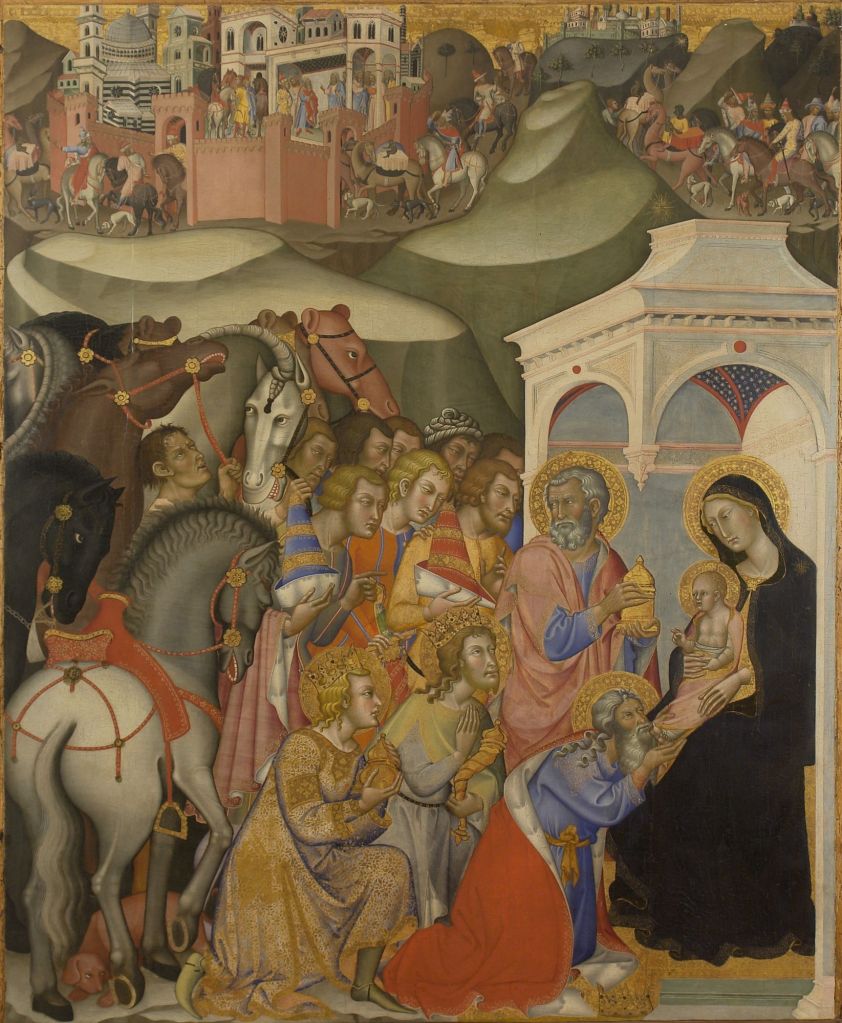
One frame. Multiple vignettes.
It’s a comic book without the boxes.
It’s economy of a single landscape in use of the full story.
It’s a masterpiece of powerful imagery by an Italian, pre-Renaissance painter.
We see this same ethos in memorials.
Find your way to the Lincoln Memorial.
An oversized, seated sculpture of the 16th president stairs into the Washington Mall from inside a temple. His gaze moves past the Greek columns of the neo-classical building. From the shadow into the light.
Lining the inside walls are some of his most famous words carved into granite. An ode to the permanence of those ideas on the US identity.
Memorials traverse time in the way they traverse space. Metaphorically, the length of the structure is meant to fill our gaze entirely. It is meant to represent a sense of timelessness.
The Vietnam Veterans Memorial, only 1000 steps away, stands as a solemn reminder of the two decade war. This dark march from 1955 to 1975. Names engraved in granite as ode to the permanence of the ultimate sacrifice. We see our own gaze in the high polish of the black stone.
There is potency within the one picture story for business, too.
Roadmaps show development plans directed by the Chief Product Officer.
Profit and Loss statements show the accounting of the year by the Chief Financial Officer.
Architectural diagrams show the vision of Chief Technology Officer.
These are all stories on a single page.
Find the author of any of those documents. They will speak for hours about the intricacies. They will describe the twists and turns. They will discuss the final outcome.
But this power is in your hands, too.
Your next request can be made real with a one story picture. It just needs to be a compelling image that excites the imagination.
Consider the most popular pictures from the Visual Capitalist:
- The Salary Needed to Buy a Home in 50 U.S. Cities
- UN Member States Not Recognized by Other Members
- The 12 Most Spoken Languages Globally
They capture the essence of what has just happened. They invite questions about the causes and the connections. They suggest what will happen.
Three things to consider in mastering the single picture story.
1. Simplicity
The “Adoration of the Magi” has a lot going on. However, notice the figures appear five times.
The cast is small. The scenes drive up the figure count, not the number of personalities.
The repetition of shapes create a visual melody across the surface.
The costumes help us see the characters up close and far away.
When we encounter a single story picture, we take in the whole, then dig into the details.
Product roadmaps are laid out with horizontal swim lanes for each major component. Time marches across the page from now into the future. Major releases are noted in boxes along those swim lanes.
We get structure with this format. We understand the alignment of milestones intended to occur over time.
2. Relationships
Like atoms in molecule, there are bonds that connect. We see the underlying relationships.
Weak bonds. Strong bonds. Broken bonds that invite new connections.
P&L statements reveal relationships through comparison.
When revenue declines and profitability increases, there is something else happening. Our eyes look for an answer in the whole chart. Are expenses similar in the prior period or lower?
The story unfolds as we notice the connections across the page. Did the R&D expense three years ago connect back to revenue today?
These relationships set up the power dynamic between the major forces in the story.
3. Personalities
Jeff Sexton is a Wizard of Ads partner and one of the most analytical minds you will ever encounter. He shared this insight about what makes a story compelling.
“You come for the plot but stay for the characters.”
He was trying to explain the enduring quality to occupy our attention.
We identify with characters. We find loyalty to them. We watch to see them overtake the challenges put in front of them.
Architectural diagrams from CTOs reveal how different technologies are assemble to form a stack.
If we personify those technologies as characters with clear personality traits, we may predict how things fit together. When we envision intentions and flaws, that diagram comes alive as a story.
If you are trying to sell your vision, your audience must identify with the story. They need to relate to it.
It is a stretch to say these things, but turning up the contrast brings clarity, too.
We can succeed in business without pictures. We can succeed without roadmaps, financial statements, or architectural diagrams.
But we rarely, if at all, succeed without storytelling.
So why not leverage the wisdom of the greats, to move your story forward?
Effectively. With high impact and low effort.
Why not put this time-tested technique to use?
After you learn to master the one picture story for your business, there is another door to open.
It is also a technique to plot your own personal story. An account, a vision, and roadmap for who you really want to be.
 The Visual8